


News in Jan 2026
January 29, 2026
Temporal Bone and Live Ear Surgery Course
We held the third annual course in November ‘25. On the first two days we had six dissection stations, each with a full surgical setup, including operating microscope, video monitor, surgical instruments and drills. We were fortunate to be able to obtain the bones for dissection through a colleague and pathology department in Chitwan. Twelve surgeons took part in the structured training with two additional junior observing surgeons. On the third day the trainees watched on screens with live audio-visual linkup while the team did several operations in our theatre, with lively debate and discussion on techniques. Procedures were also streamed on YouTube. Trainees, including some experienced surgeons, attended from various parts of Nepal, including some from Kathmandu. Most costs were met by residual funds form the Warwick research.
On the last evening, we held a medical education seminar and dinner in a hotel at lakeside. All course attendees and Pokhara ENT surgeons were invited and about 45 persons attended. We had two excellent talks about mastoiditis by our visiting bursary registrar from the UK. EAN funded food and limited drinks.
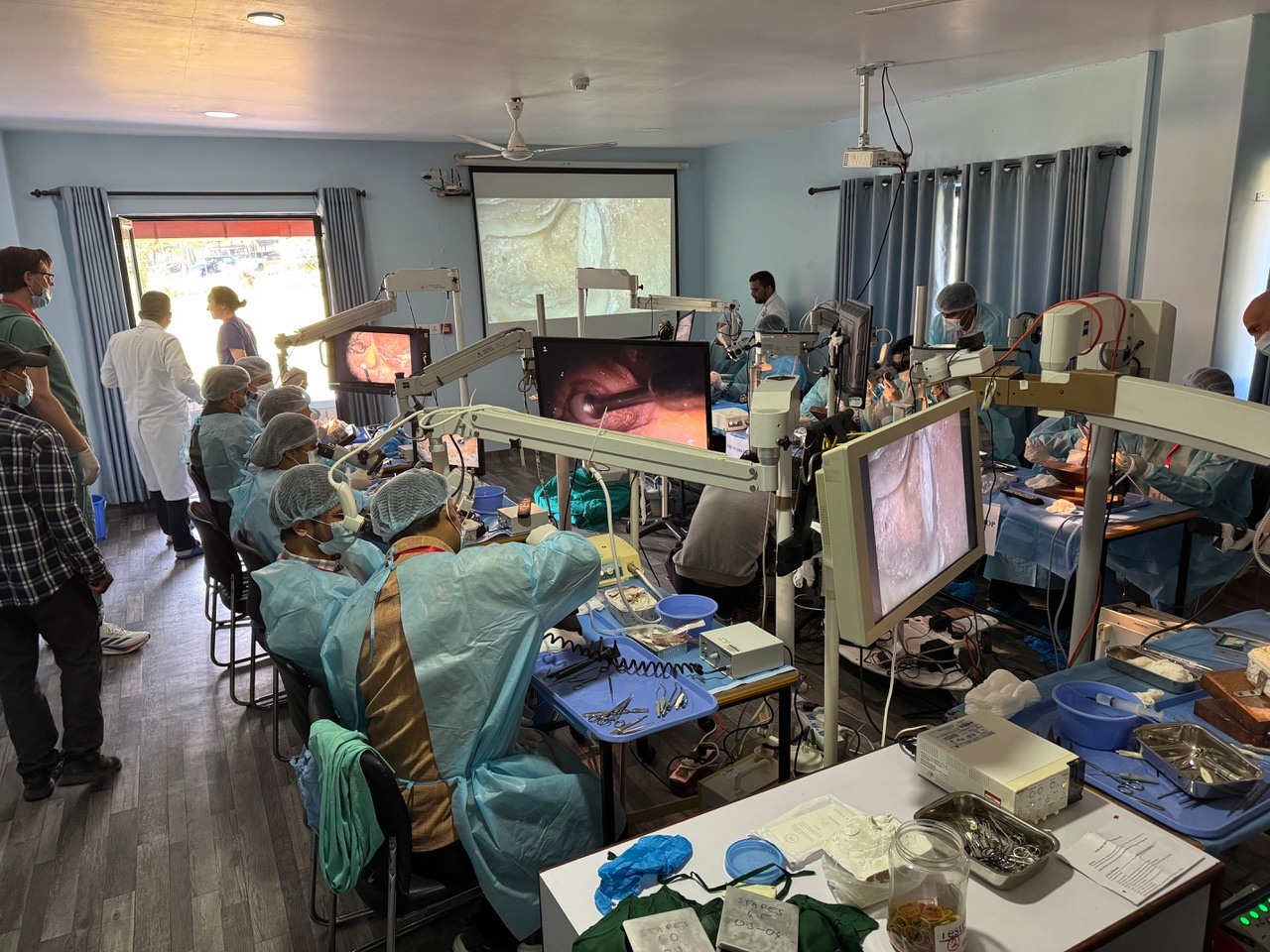
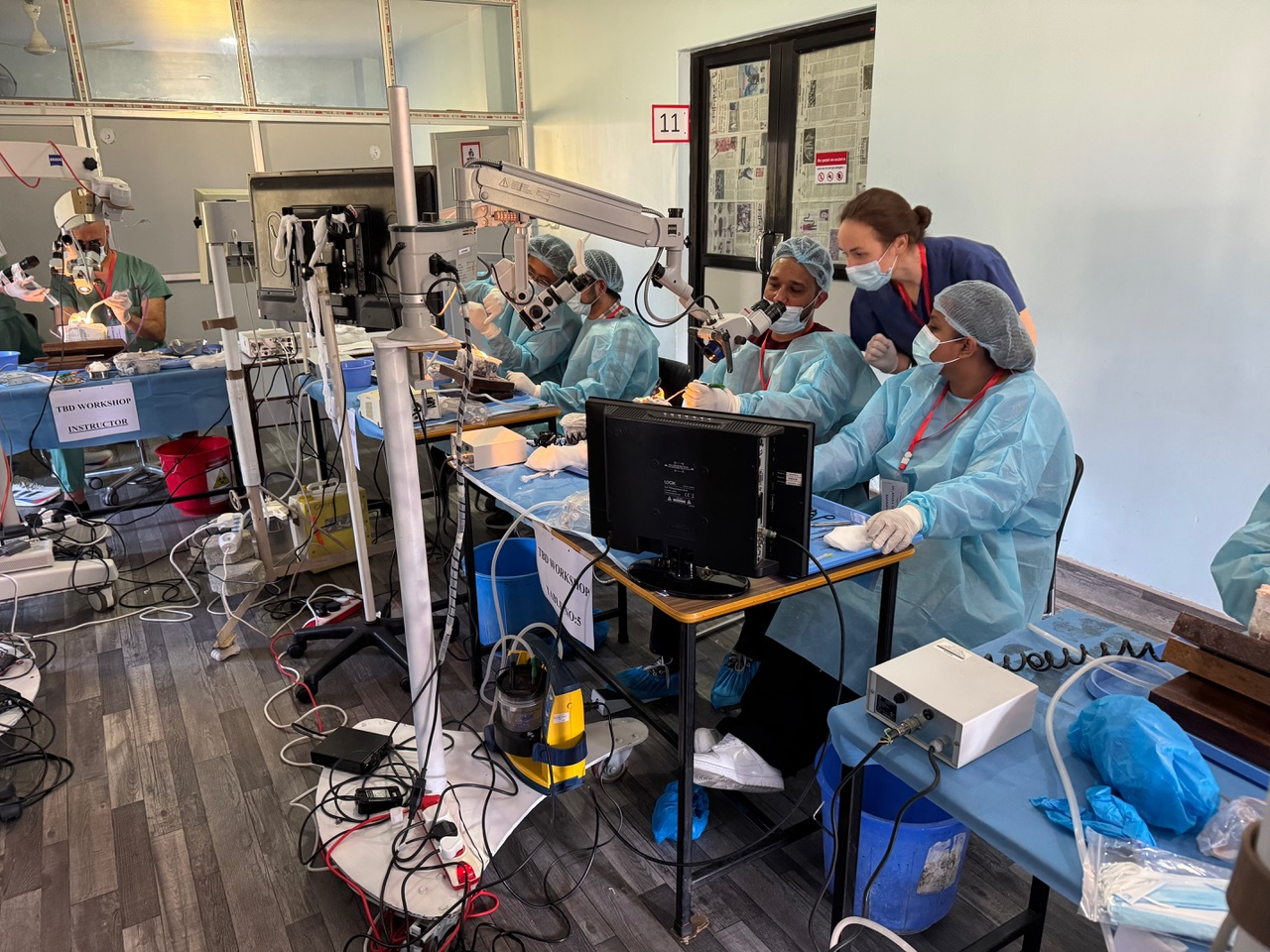
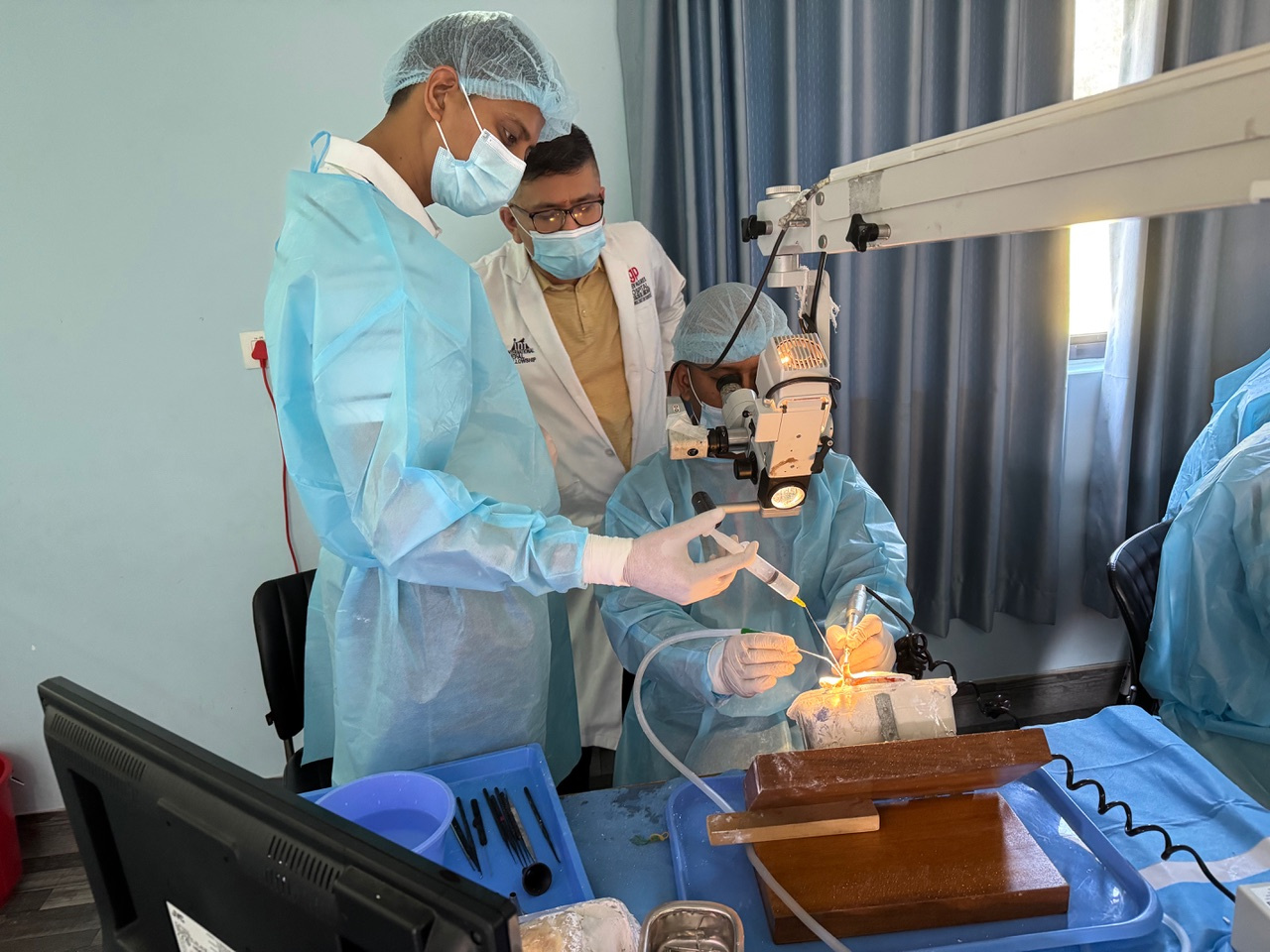
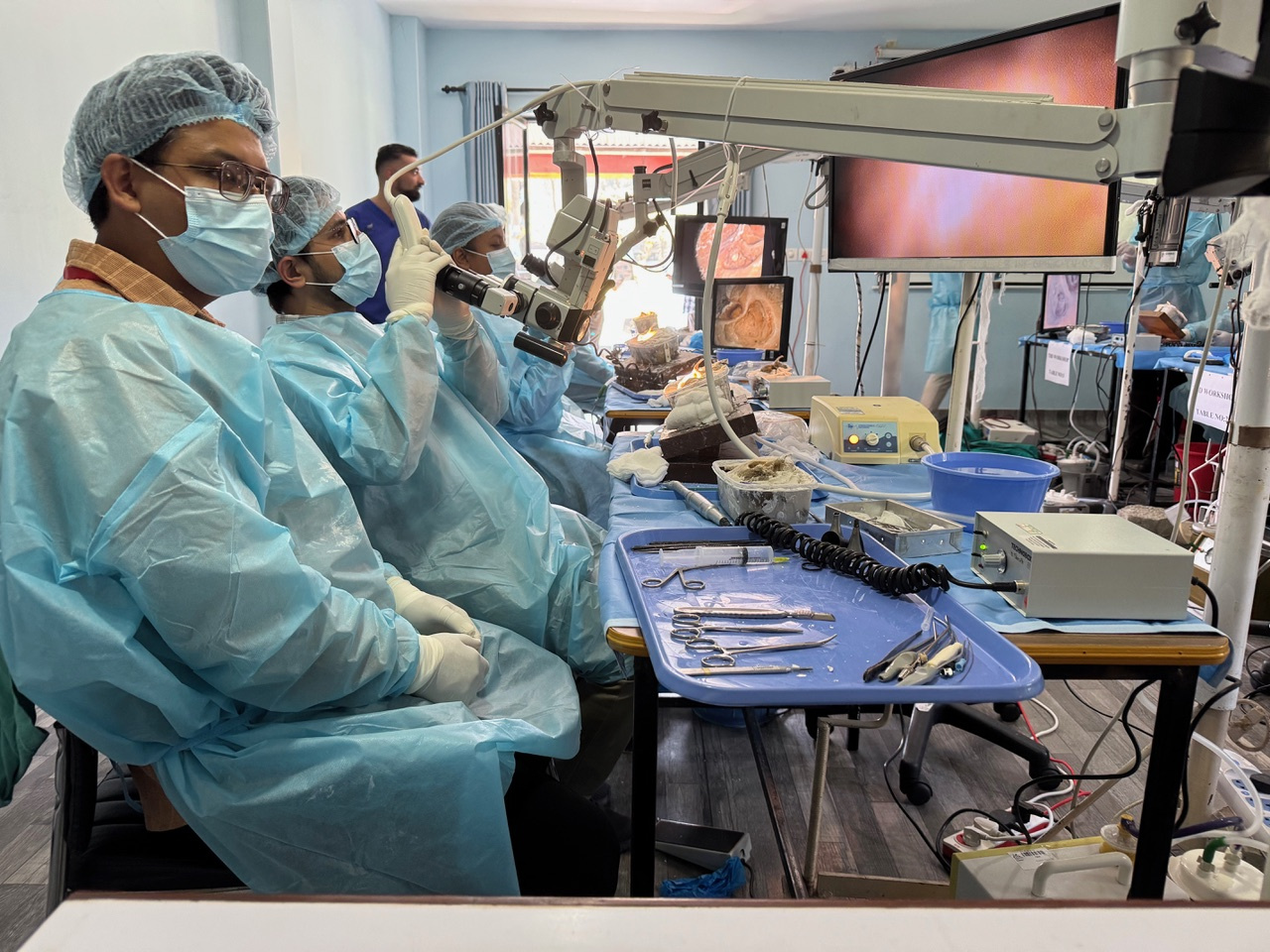
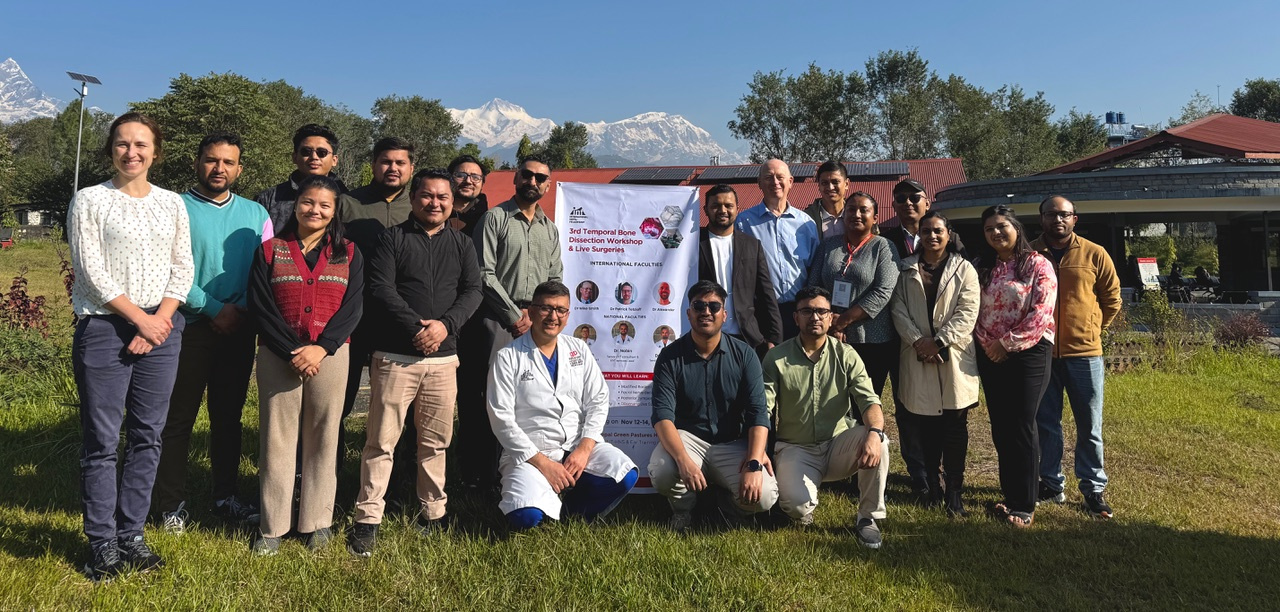
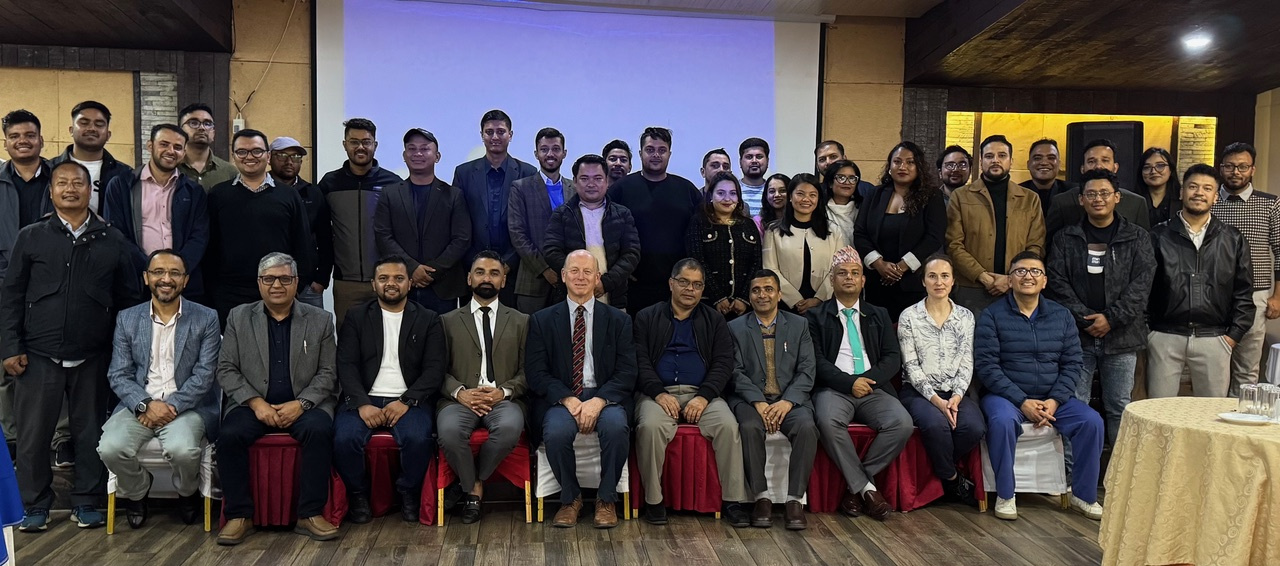
One young surgeon came from Jumla in the mountainous NW of Nepal, where we are trying to support the new ENT department at the Karnali Academy of Health Sciences (KAHS), more about that below.
Volunteers:
Several overseas volunteers have visited the ear centre in recent months, for which we are very grateful, their input is always very welcome.
These include:
Audiologists:
Mana Ahnood, senior paediatric audiologist from Imperial College, London, for 1/52.
Soni Rana and Bindiya Patel each came for about 6/52 to complete the Warwick University Low-Cost Hearing Aid field trials. More below.
Doctors:
Alexander Uppheim, consultant otologist from Tromso, Norway and his otology colleague Patrick from Sweden came at very short notice and helped teach on the Temporal Bone Course. We were very grateful for their support, they managed to bring some surgical sundries such as otology prostheses, which are always very welcome. Unfortunately, after a couple of days Alex developed a high fever and thought he might have contracted Dengue during his transit stopover in Thailand. They rapidly travelled home in case he developed any significant complications. Thankfully it turned out to be nothing serious. None the less their input on the first day of the course was invaluable.
Bursary registrar:
We selected two UK registrars by open competition for small EAN bursaries again this year. Due to the political turmoil with Gen Z in Kathmandu and beyond in September 2025, only one has visited so far, the other (Matthew Farr) will we hope come in the spring of 2026.
Heidi Jones came for two weeks overlapping the TBC. She was an enormous help with the course, as all our local three surgeons, myself, Heidi, and our Scandinavian colleagues moved between dissection tables advising and demonstrating. She also held the fort when Alex was ill and at the last minute she produced two good papers to present at the evening seminar.
Expected for 2026:
Holly Cartwright, audiologist currently working in Saudi, will come in March for two weeks.
We have had several other contacts, but nothing confirmed so far.
Mike’s movements:
Mike was pleased to be invited to help set up some ENT services in Colombia and in Tanzania this year. In July he spent 2 1/2 weeks helping on a mission hospital boat on the upper Amazon, at the junction of Colombia, Peru and Brazil. There were 5 trainee Colombian ENT surgeons who screened a large number of ENT patients. From among these we selected several for surgery. Mostly for ear surgery but also one nasal procedure. He helped them set up their facilities by donating a full set of ENT surgical instruments and teaching some nursing staff. Mike also took a few days to tour some community projects in Bogota with his hosts and to visit the jungle.
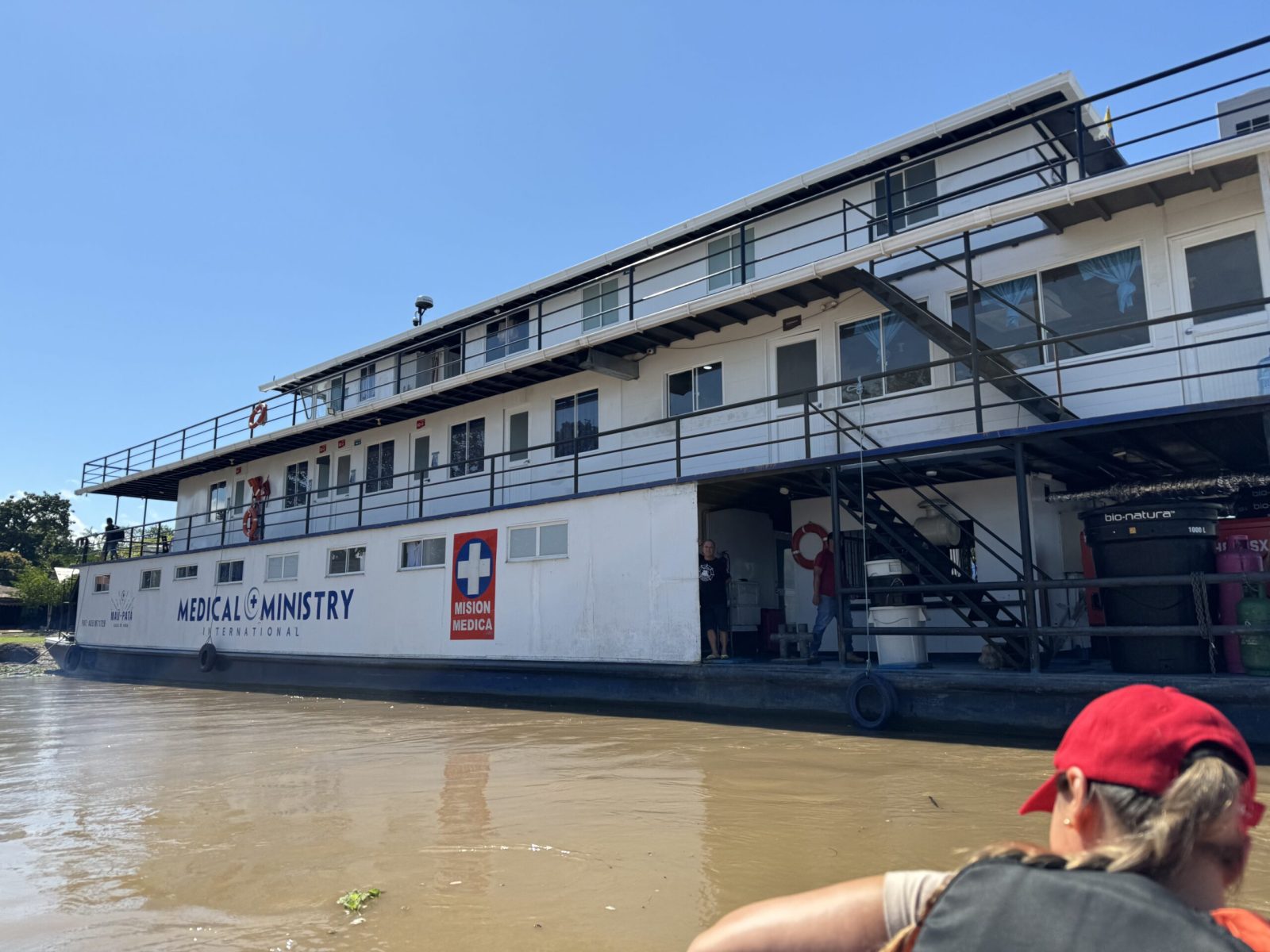
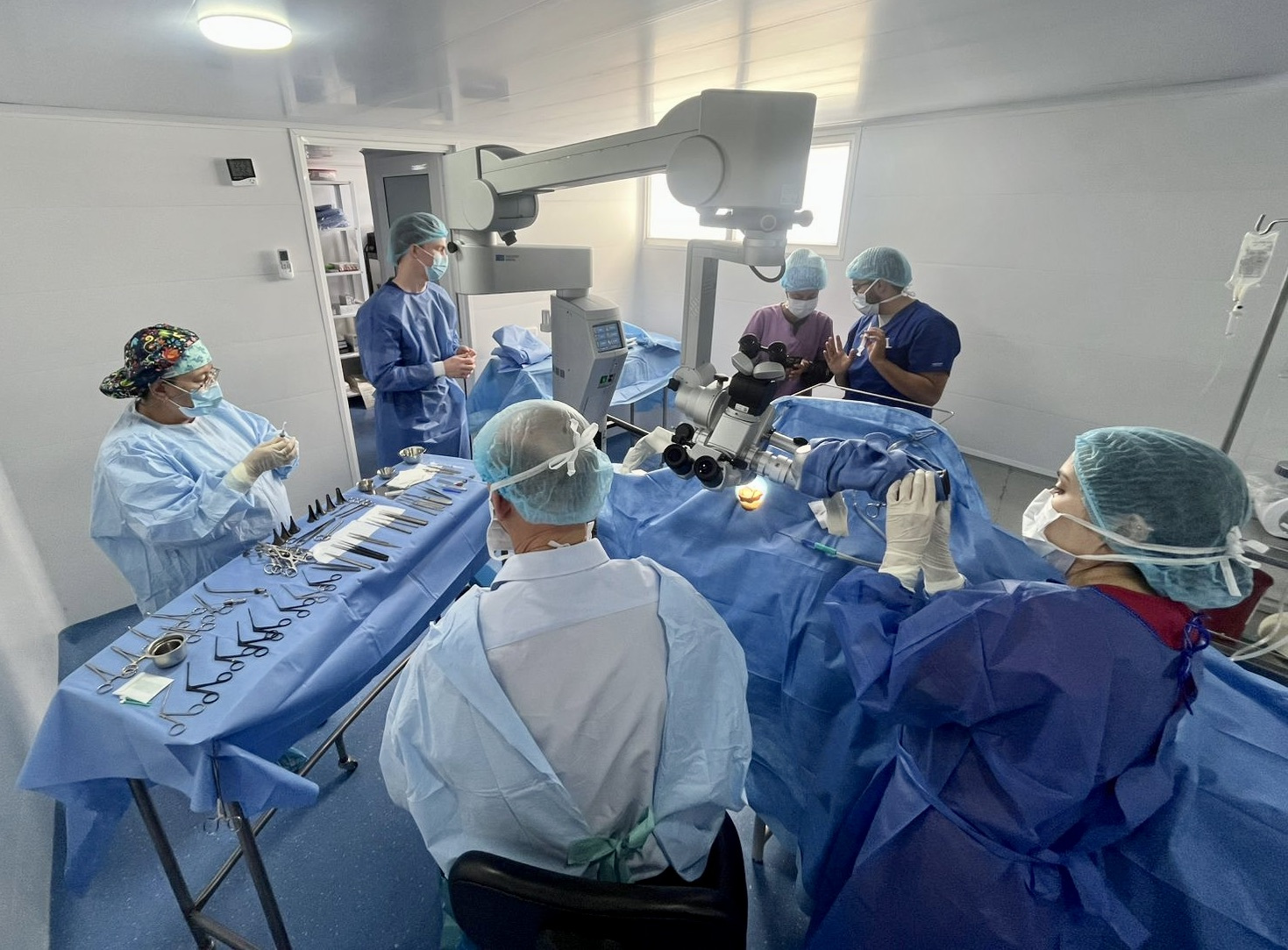
Colombian Hospital boat.
A few weeks later he was able to fly to Kigali in Rwanda and then travel by road to a small Anglican mission hospital (Murgwanza) in northern Tanzania. He helped an Australian mission select suitable ENT equipment for the hospital. They had organised training for an ENT doctor, but he lacked many basic facilities. Mike was able to take another full set of ENT surgical instruments and help them unpack and set up items that arrived from India during his visit, such as surgical microscopes, audiometer and other out-patient equipment. This was another fruitful time and only arose as a result of the work in Nepal.
Then in November Mike went to Pokhara in Nepal to support the team at the Ear Centre and run the TBC. Fortunately, INF was able to facilitate him obtaining another brief Nepal Medical Council registration. He was also able to take another large selection of ENT instruments for the Hospital.
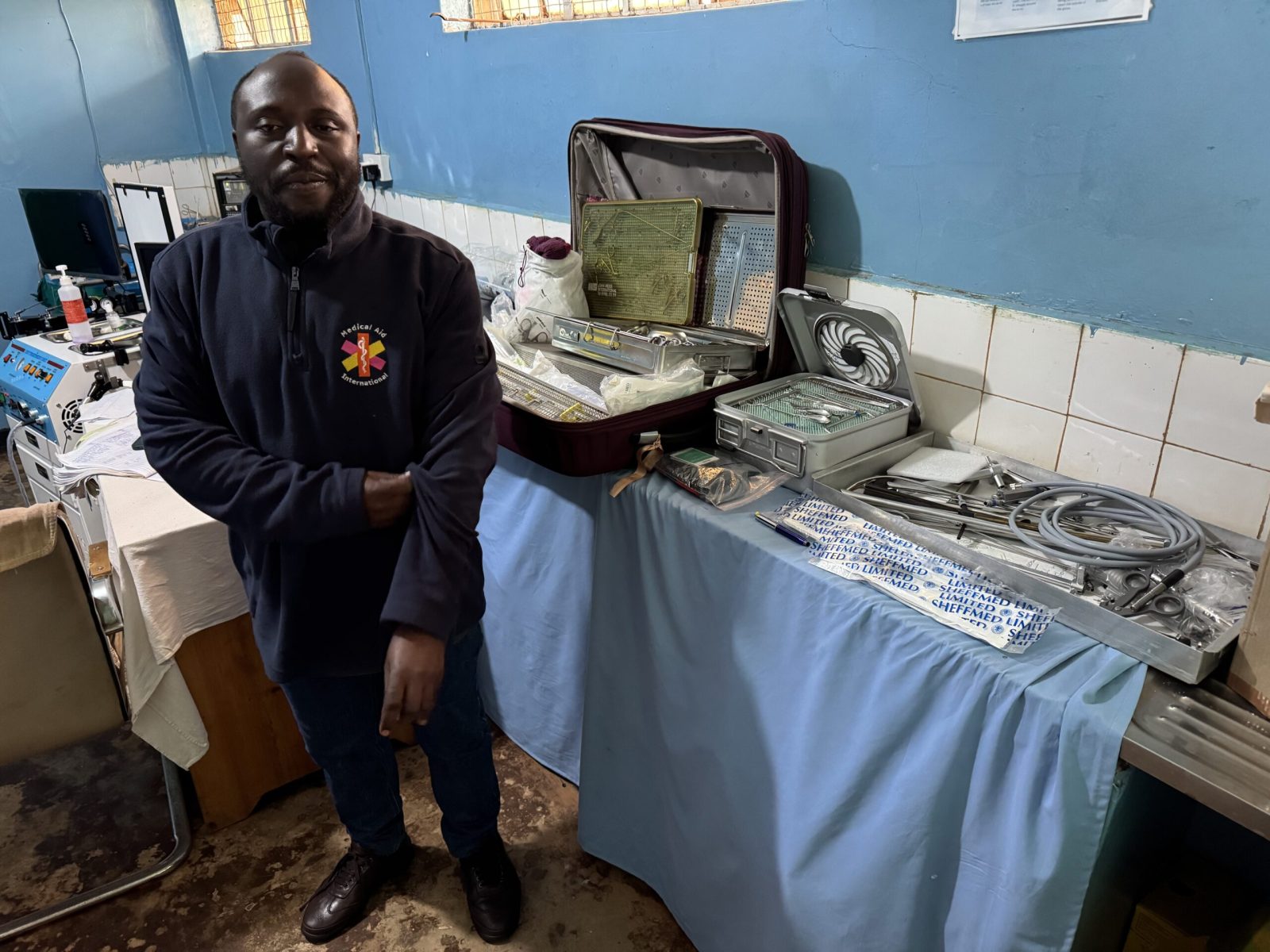
Medical Aid International
Tim Beacon of MedAid has been enormously helpful. His relief agency sends equipment such as full theatre setups to LMIC situations. He had a lot of donated surgical equipment, including many ENT instruments which were largely unidentified. Mike enjoyed going through these and making up several sets, which Tim donated freely.
Other items donated to Nepal
A large operating microscope donated by Hereford hospital has proved difficult so far to send overseas, but it had an excellent video imaging and recording system. Mike removed this and took it to the Ear Centre. One expensive ($720) Sony cable was missing and had to be purchased on-line, EAN paid and the whole system is now working and in the theatre.
Another full range of ENT surgical instruments was donated by Tim at MedAid. This was taken to Pokhara and sent on to Jumla. It has now been officially handed over to the ENT department at KAHS. We hope that one of our ENT surgeon trustees will be able to visit Jumla in 2026 to offer further training.
We have had several generous free of charge or discounted donations by various companies.
Including:
Sheffmed: Crescent retractors with elastic stays, suction tips, ointment applicators, ear specula, micro-scissors, wax hooks, etc
Mercian: mastoid drill irrigation tubing
DTR medical: suction tubes and sundries
Kurz (Dan Batsch): ossicular prostheses
Bien Air: repair and maintenance of mastoid drill handpieces.
Many individuals have collected useful items such as wax hooks, suction tubes, drill burrs, BIPP dressings and hearing aids for us. (e.g. Tom Martin, Steve Broomfield, Sereta Parker and several others. Most supporters, visitors and volunteers try to bring items with them or pass them to us to take out to Nepal.)
Anaesthetic machine,
Thanks to a very generous donation from a UK trust, supplemented by a significant amount form EAN we have been able to send sufficient funds to Nepal to purchase an anaesthetic machine for the Ear Centre operating theatre.
This is very much needed; the current machines were elderly before they were gifted to us some years ago. We have managed to keep one running with spare parts, but these are difficult to obtain and the machines lack some essential patient safety monitoring.
There have been a number of delays in delivery partly due to the initial device being identified by the vendor in Nepal as being faulty, on arrival from India. We are expecting a replacement up to date device very soon.
Research
- Warwick University Low-cost Hearing Aids for LMICs study.
This important project has been running through difficulties with Covid, electronic chip shortages, funding issues, circuit board printing, software, ethics and other matters for several years, but it is finally completed! We recruited two volunteer UK trained senior audiologists to go to Nepal for a total of about 3 months in 2025. 50 new high quality prototype rechargeable aids were fitted to suitable users and they were followed up for outcomes. The results now need to be analysed and published. Initial impressions are positive and a good basis for further studies.
- Low-cost titanium Total Ossicular Replacement Prosthesis (TORP) studies.
For several years Arjan Knulst the INF biotechnical advisor at Green Pastures Hospital has arranged engineering students from his University (Delft) to work for several months in the Netherlands and in Nepal to create these prostheses. They were based on an idea from Mike who made some simpler medical grade titanium wire prostheses. An initial follow up study of patients fitted with these showed them to be equally effective to the very expensive commercial devices. These wire models were relatively crude and we wanted to build more sophisticated but financially viable and licensable alternatives. The students tried various techniques such as 3D printing and laser cutting, and used some mechanical tests of their function using university technical facilities. The results look very promising and a paper has been submitted recently to a peer reviewed international journal.
EAN meetings
We continue to hold online trustee meetings every 2-3 months. We review expenditure, projects and potential volunteers/visitors. Trustees receive no remuneration. As well as the UK based trustees (one of whom is of Nepali origin), we are often joined by Nepali colleagues, including Dr Suman, Medical director of Green Pastures Hospital.
Website
We have struggled with adding content to the website as frequently as we wish, since moving servers and platforms. However, Tom Martin, one of our trustees, has kindly agreed to try and get to grips with this!
We have more news and educational material such as clinical and surgical videos to upload. We do get regular visitors to these educational pages, even though they are not immediately obvious, (found under the top ‘Education’ tab).
Nepali bursary doctors.
Through an amazing series of connections and coincidences we were able to offer two bursaries for two of our Ear Centre doctors to visit Australia in 2025.
Alex Saxby, associate professor of otology at Sydney University contacted us as a potential volunteer. He mentioned that he was responsible for an ear dissection and surgical course including microscopic and endoscopic techniques and could reserve two places for our doctors, free of charge. In addition, the course was running immediately after the Australasian ENT conference, and they offered us two student rate places. There was an additional wonderful outcome, Steve Broomfield was able to help our doctors apply for a humanitarian grant from the Australian society of ENT and they were successful. So that left EAN with much lower expenses, just to cover some travel and accommodation. Finally, it turned out that another EAN trustee, Sara Timms would be in Australia on an otology fellowship, and that Mike and wife Fiona would also be visiting to see their son Luke and his family in Sydney, so we are all able to gather for dinner by the beach one evening. We had great feedback from this visit from all sides.
In 2026 we hope to send two Nepali surgeons, one from the Ear Centre and one, by open competition from elsewhere in Nepal, to the 4-5 day Copenhagen ear, nose, head and neck dissection course. Professor Per Thomasen has negotiated a period of observation in an otology unit of a teaching hospital in Denmark to run before or after this. Places are confirmed as reserved on the course.
Jumla,
Mike Szymanski, an ex-INF paramedical volunteer from the USA worked with his family in Jumla for several years. After leaving he and his wife Mary maintained strong local contacts and setup several programmes of community health. He also set up some village-based community ear clinics following on from our ear camps there. They identified a lot of patients needing ear surgery. Jumla, though remote now has large government teaching hospital called KAHS. The hospital has appointed two ENT surgeons. One of these, Dr Sumit, has committed to dealing with these operations. He lacked some basic facilities. KHAS has provided some equipment, but he needed further training and support. EAN was asked to help. We arranged for Dr Sumit to attend the TBC in Pokhara and stay for an additional week of observation at the Ear centre in November 2025. We have also supplied good quality surgical instruments. Through Mike Szymanski and a local NGO we hope to supply an additional Zeiss Surgical microscope from the UK to the hospital. Dr Sumit has now operated on most of the identified cases for simple tympanoplasty, with good results but some mastoid patients remain. We know from past experience that there will be many more patients in the area. Dr Sumit has made connections with Nepalganj Medical college and their surgeons are offering to support and visit KAHS or take more complex patients that he refers. The nature of Jumla is that doctors often move on after a year or two, but we hope that we can continue to offer support and perhaps one or more of our trustees will be able to visit.
Charity report.
EAN sends regular amounts to INF Green Pastures hospital for the charity/poor fund. The money is only used to cover all or part of the expense of needy patients that attend the Ear Centre. This is our major expense.
The hospital sends us very good detailed reports on the patients helped in this way. We upload these to our website (with names redacted).
In summary and as an example, just in the three months between September and December 2025, these were the people supported:
26 patients (18 male, 8 female). Total cost £2,982.
The social welfare department at the hospital assesses the family and the percentage of their care that they can pay themselves and the amount of additional help they need.
This amount paid between 27% and 100% of each patient’s treatment costs.
They came from the following districts of Nepal:
Kaski, Syangja, Myagdi, Tanahu, Baglung, Parbat, Lamjung, Rolpa, and Jumla.
The funds were for surgery for 21 patients, ages 6y -59y.
(One of these was a15y old boy with a history of repeat surgery for cleft lip and palate, who now needed a mastoid operation. He had suffered ear problems since age 3 years).
Another 4 patients had support for hearing aids, including a 6-month-old boy who needed aids for both ears.
An OPD patient was a 28 year old male from Mustang district who needed a CT angiogram.
Finally
A big thank you for all your interest and support. Best wishes for this New Year.
As always, we are delighted by donations and assure you that they are well used.
It is easy through the donations page on our website:
https://www.earaidnepal.org/donate
Please don’t forget to order a copy of: ‘Medicine in the Mountains’, by David
Hawker, Ellen Findlay and Mike Smith. It tells about the ear and other medical
camps in remote parts of Nepal and the development of the Ear Hospital
An audio version will be available shortly.
Link:
Or direct from the publishers, Austin-Macauley. Mike also has a few copies.
Mike Smith, on behalf of the Ear Aid Nepal Trustees,
